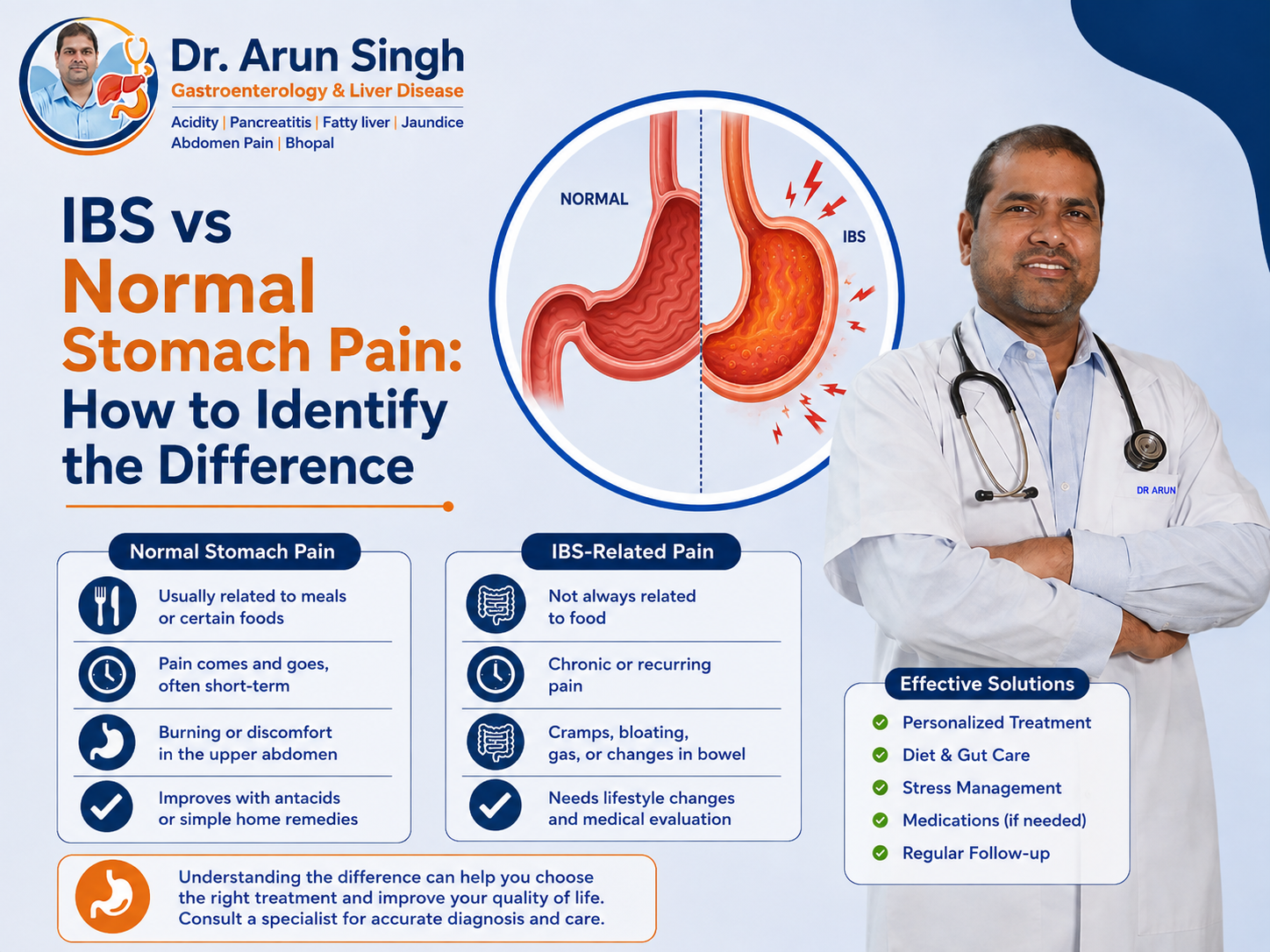
Understanding the difference between IBS and normal stomach pain is the first step toward getting the right treatment. If your symptoms continue for weeks or interfere with your routine, it is important to seek IBS treatment in Bhopal from an experienced digestive specialist.
Dr. Arun Singh, recognized by many patients as the Best Gastroenterologist in Bhopal, specializes in diagnosing and treating digestive disorders, including IBS. With a patient-focused approach and evidence-based treatment, he helps individuals manage their symptoms and improve their quality of life.
Stomach pain is one of the most common health complaints experienced by people of all ages. Sometimes it happens after eating spicy food, skipping meals, or having a stomach infection. In many cases, the discomfort goes away within a few hours or a day. However, what if the pain keeps coming back? What if it is accompanied by bloating, constipation, diarrhea, or an urgent need to use the bathroom?
These recurring symptoms could indicate Irritable Bowel Syndrome (IBS), a common digestive disorder that affects the large intestine. Unlike normal stomach pain, IBS is a long-term condition that requires proper diagnosis and management. Unfortunately, many people ignore these symptoms or mistake them for simple indigestion, allowing the condition to affect their daily life.
What Is IBS and How Is It Different from Normal Stomach Pain?
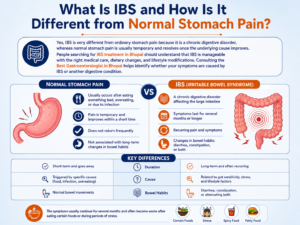
Yes, IBS is very different from ordinary stomach pain because it is a chronic digestive disorder, whereas normal stomach pain is usually temporary and resolves once the underlying cause improves.People searching for IBS treatment in Bhopal should understand that IBS is manageable with the right medical care, dietary changes, and lifestyle modifications. Consulting the Best Gastroenterologist in Bhopal helps identify whether your symptoms are caused by IBS or another digestive condition.
Everyone experiences stomach pain occasionally. It may occur after eating spoiled food, overeating, or having a viral infection. In most situations, the pain improves within a short period and does not return frequently.
IBS, or Irritable Bowel Syndrome, is different. It is a functional disorder of the digestive system, which means the intestines do not work as they should, even though they may appear normal during many medical tests. People with IBS often experience recurring abdominal pain along with changes in bowel habits such as diarrhea, constipation, or both.
The symptoms usually continue for several months and often become worse after eating certain foods or during periods of stress.
How Can You Tell If Your Stomach Pain Is IBS or Just Temporary?
The easiest way to identify IBS is by looking at how often the symptoms occur and whether they are associated with changes in bowel movements.
Temporary stomach pain generally has a clear cause. It may happen after eating unhealthy food, drinking contaminated water, or experiencing mild food poisoning. Once the cause is treated, the pain usually disappears completely.
If these symptoms continue despite home remedies, you should consider consulting Dr. Arun Singh for IBS treatment in Bhopal. As the Best Gastroenterologist in Bhopal, he carefully evaluates each patient before recommending a personalized treatment plan.
IBS behaves differently because the symptoms tend to return repeatedly.
Some common signs that suggest IBS include:
- Recurring abdominal pain that lasts for several weeks or months.
- Pain that improves after passing stool.
- Frequent bloating or excessive gas after meals.
- Alternating episodes of diarrhea and constipation.
- Feeling that the bowel has not emptied completely after using the toilet.
- Symptoms that worsen during emotional stress or after eating certain foods.
What Are the Most Common Symptoms of IBS?
The symptoms of IBS vary from person to person, but they usually involve repeated digestive discomfort rather than occasional stomach pain.
Does IBS Cause Recurrent Abdominal Pain?
Yes. Recurrent abdominal pain is one of the most important symptoms of IBS. The pain may feel like cramping, aching, or pressure in different parts of the abdomen. Many patients notice that the discomfort reduces after passing stool but returns later.
Unlike normal stomach pain, IBS-related pain comes back repeatedly and can continue for months if not managed properly.
Patients seeking IBS treatment in Bhopal often report that this recurring pain interferes with work, travel, and daily activities.
Can IBS Cause Diarrhea, Constipation, or Both?
Yes. One of the unique features of IBS is the change in bowel habits.
Some patients experience frequent loose stools, while others suffer from constipation. Many people alternate between both conditions, making the symptoms confusing and frustrating.
This pattern is rarely seen in ordinary stomach infections, which is why proper evaluation by the Best Gastroenterologist in Bhopal is important.
Why Does IBS Cause Bloating and Gas?
Bloating occurs because the intestines become more sensitive and digestive movement becomes irregular.
Many people with IBS feel as though their stomach becomes swollen after eating even a small meal. Excessive gas, fullness, and abdominal tightness are also common complaints.
Receiving proper IBS treatment in Bhopal can help reduce bloating through dietary advice, medication, and lifestyle modifications.
What Causes IBS While Normal Stomach Pain Usually Goes Away?
The exact cause of IBS is still not completely understood, but doctors believe several factors work together to trigger the condition.
One important factor is abnormal communication between the brain and the intestines. The digestive system becomes overly sensitive, causing pain even when there is no serious disease.
Another common cause is irregular muscle contractions inside the intestine. These abnormal movements may lead to diarrhea, constipation, or both.
Stress and anxiety can also play a major role. Many people notice that their IBS symptoms become worse during emotional stress, examinations, work pressure, or lack of sleep.
Certain foods may trigger symptoms in some individuals. Spicy meals, caffeine, dairy products, carbonated drinks, and processed foods are common triggers.
Previous intestinal infections may also increase the risk of developing IBS.
Unlike temporary stomach pain, which usually has a short-term cause, IBS often requires ongoing care. Patients looking for IBS treatment in Bhopal benefit from identifying their personal triggers with the help of the Best Gastroenterologist in Bhopal.
Who Is More Likely to Develop IBS?
IBS can affect anyone, but certain people have a higher chance of developing the condition.
Women are diagnosed with IBS more frequently than men, although both genders can develop the disorder.
People below the age of 50 are also more commonly affected.
Individuals with a family history of IBS may have an increased risk.
People living with long-term stress, anxiety, or depression may experience IBS symptoms more frequently because emotional health and digestive health are closely connected.
People with irregular eating habits, poor sleep, and sedentary lifestyles may also develop digestive problems that contribute to IBS.
If you belong to any of these groups and experience persistent digestive discomfort, seeking IBS treatment in Bhopal can help prevent symptoms from affecting your daily life. Dr. Arun Singh, known as the Best Gastroenterologist in Bhopal, provides comprehensive evaluation and individualized treatment for patients with IBS.
When Should You Consult a Gastroenterologist for Stomach Pain?
You should not ignore stomach pain if it continues for several weeks, keeps returning, or is associated with other digestive symptoms.
Medical evaluation becomes important if you experience:
- Persistent abdominal pain that does not improve with home remedies.
- Frequent diarrhea or constipation lasting several weeks.
- Blood in the stool.
- Sudden unexplained weight loss.
- Persistent bloating after almost every meal.
- Severe abdominal pain that wakes you from sleep.
- Ongoing digestive discomfort that affects your daily routine.
While many cases of stomach pain are harmless, persistent symptoms should always be evaluated by an experienced specialist.
Dr. Arun Singh offers advanced diagnosis and personalized IBS treatment in Bhopal, helping patients understand the exact cause of their symptoms. As the Best Gastroenterologist in Bhopal, he focuses on identifying digestive disorders early so patients receive the right care before complications develop.
How Is IBS Diagnosed?
Yes, IBS can be diagnosed, but there is no single test that confirms the condition. Instead, doctors diagnose IBS by understanding your symptoms, reviewing your medical history, performing a physical examination, and ruling out other digestive disorders.
Dr. Arun Singh believes that an accurate diagnosis is the first step toward successful IBS treatment in Bhopal. Since many digestive diseases share similar symptoms, identifying the exact cause is essential before starting treatment.
Some commonly recommended investigations include:
Does the Doctor Review Your Symptoms First?
Yes. Your doctor will ask several questions about your symptoms, including:
- How long you have been experiencing stomach pain.
- Whether the pain improves after passing stool.
- If you frequently experience constipation, diarrhea, or both.
- Whether certain foods or stress trigger your symptoms.
- Whether anyone in your family has digestive disorders.
These details help distinguish IBS from infections, inflammatory bowel disease, ulcers, or other gastrointestinal conditions.
Are Blood Tests and Stool Tests Needed?
Yes, in some cases they are.
Blood tests help rule out infections, anemia, thyroid disorders, or inflammation.
Stool tests help detect infections, parasites, or hidden blood that may indicate another digestive disease rather than IBS.
Is Colonoscopy Required for IBS?
Not everyone with IBS needs a colonoscopy.
However, if a patient has warning signs such as:
- Blood in stool
- Unexplained weight loss
- Severe anemia
- Family history of colon cancer
- Symptoms beginning after the age of 50
the doctor may recommend colonoscopy to rule out more serious conditions.
Patients seeking IBS treatment in Bhopal receive a personalized evaluation from Dr. Arun Singh, widely regarded as the Best Gastroenterologist in Bhopal, ensuring accurate diagnosis and appropriate care.
What Are the Best Treatment Options for IBS?
Yes, IBS can be managed successfully with the right combination of medications, dietary changes, stress management, and lifestyle modifications.
Since IBS affects every patient differently, treatment is always personalized.
Can Medicines Help Control IBS Symptoms?
Yes.
Depending on the patient’s symptoms, the doctor may prescribe medicines to:
- Relieve abdominal pain.
- Control diarrhea.
- Improve constipation.
- Reduce intestinal spasms.
- Improve gut function.
These medicines help improve daily comfort but should only be taken under medical supervision.
Does Diet Play an Important Role in IBS Treatment?
Absolutely.
Diet is one of the biggest factors affecting IBS symptoms.
Many patients notice significant improvement after making simple dietary changes.
During IBS treatment in Bhopal, Dr. Arun Singh helps patients identify foods that trigger symptoms instead of following unnecessary food restrictions.
Can Stress Management Improve IBS?
Yes.
The digestive system and brain are closely connected. Emotional stress, anxiety, and poor sleep can worsen IBS symptoms.
Simple relaxation techniques such as meditation, deep breathing, yoga, regular exercise, and maintaining a healthy sleep schedule can reduce flare-ups.
Patients consulting the Best Gastroenterologist in Bhopal often receive advice on both digestive health and lifestyle improvements for long-term symptom control.
Which Foods Should You Eat If You Have IBS?
Yes, choosing the right foods can help reduce IBS symptoms and improve digestive health.
Although food triggers differ from person to person, some healthy eating habits benefit most patients.
Foods that are generally easier to digest include:
- Freshly cooked home-made meals.
- Oats and whole grains in moderate quantities.
- Bananas and papaya.
- Rice and boiled vegetables.
- Lean proteins such as fish and chicken.
- Plenty of water throughout the day.
Eating smaller meals instead of heavy meals also helps reduce digestive discomfort.
Patients undergoing IBS treatment in Bhopal are encouraged to maintain a food diary to identify individual triggers.
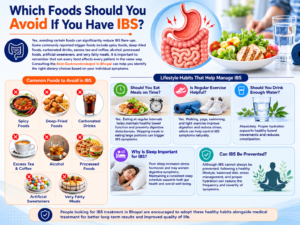
Which Foods Should You Avoid If You Have IBS?
Yes, avoiding certain foods can significantly reduce IBS flare-ups.
Some commonly reported trigger foods include:
- Spicy foods.
- Deep-fried foods.
- Carbonated drinks.
- Excess tea and coffee.
- Alcohol.
- Processed foods.
- Artificial sweeteners.
- Very fatty meals.
It is important to remember that not every food affects every patient in the same way.
The Best Gastroenterologist in Bhopal can help determine which foods should be limited based on your individual symptoms instead of following unnecessary restrictions.
Can IBS Be Prevented?
Although IBS cannot always be prevented, healthy lifestyle habits can reduce the frequency and severity of symptoms.
Some useful preventive measures include:
Should You Eat Meals on Time?
Yes.
Eating at regular intervals helps maintain healthy bowel function and prevents digestive disturbances.
Skipping meals or eating very large portions can trigger IBS symptoms.
Is Regular Exercise Helpful?
Yes.
Walking, yoga, swimming, and light exercise improve digestion and reduce stress, which can help control IBS symptoms naturally.
Should You Drink Enough Water?
Absolutely.
Proper hydration supports healthy bowel movements and reduces constipation.
Why Is Sleep Important for IBS?
Poor sleep increases stress hormones and may worsen digestive symptoms.
Maintaining a consistent sleep schedule supports both gut health and overall well-being.
People looking for IBS treatment in Bhopal are encouraged to adopt these healthy habits alongside medical treatment for better long-term results.
Why Choose Dr. Arun Singh for IBS Treatment in Bhopal?
Choosing an experienced gastroenterologist is one of the most important decisions for anyone suffering from long-term digestive problems.
Dr. Arun Singh is an experienced gastroenterologist who specializes in diagnosing and treating disorders affecting the stomach, intestines, liver, pancreas, and digestive tract.
Patients choose him because he offers:
- Comprehensive evaluation of digestive symptoms.
- Accurate diagnosis using modern investigations.
- Personalized treatment plans based on individual needs.
- Evidence-based medical care.
- Long-term management and follow-up.
- Patient-friendly consultation with clear explanations.
If you have persistent abdominal pain, bloating, constipation, diarrhea, or recurring digestive discomfort, consulting Dr. Arun Singh for IBS treatment in Bhopal can help improve your quality of life.
His patient-focused approach has made him one of the Best Gastroenterologist in Bhopal for managing IBS and other digestive disorders.
Frequently Asked Questions (FAQs)
Is IBS treatment in Bhopal effective for long-term symptom relief?
Yes. Most patients experience significant improvement with proper diagnosis, medications, dietary modifications, and lifestyle changes. Early IBS treatment in Bhopal can help control symptoms and improve daily life.
Who is the Best Gastroenterologist in Bhopal for IBS treatment?
Dr. Arun Singh is an experienced gastroenterologist who provides comprehensive evaluation and personalized care for IBS and other digestive disorders. Many patients consider him among the Best Gastroenterologist in Bhopal because of his evidence-based treatment approach.
Can IBS cause stomach pain every day?
Yes. Some people experience daily abdominal discomfort, while others have symptoms only during flare-ups. If stomach pain continues for several weeks, consult a specialist for IBS treatment in Bhopal.
What foods should I avoid during IBS treatment in Bhopal?
Foods such as spicy dishes, fried foods, carbonated beverages, excessive caffeine, alcohol, and highly processed foods commonly trigger IBS symptoms. Your doctor can recommend a personalized diet plan based on your symptoms.
When should I visit the Best Gastroenterologist in Bhopal for stomach pain?
You should consult a gastroenterologist if stomach pain lasts for several weeks, keeps returning, is associated with diarrhea or constipation, causes weight loss, or affects your daily activities. Early diagnosis helps identify whether the symptoms are due to IBS or another digestive disorder.
Can stress make IBS symptoms worse?
Yes. Stress is one of the most common triggers for IBS flare-ups. Managing stress through regular exercise, meditation, proper sleep, and relaxation techniques can help reduce symptoms along with professional IBS treatment in Bhopal.
Is IBS a lifelong condition?
IBS is considered a chronic condition, but it can be managed effectively with the right treatment, healthy eating habits, stress management, and regular follow-up with the Best Gastroenterologist in Bhopal. Many patients lead normal and active lives after receiving appropriate care.